

Baisma

By Naroa Vázquez - march 2026

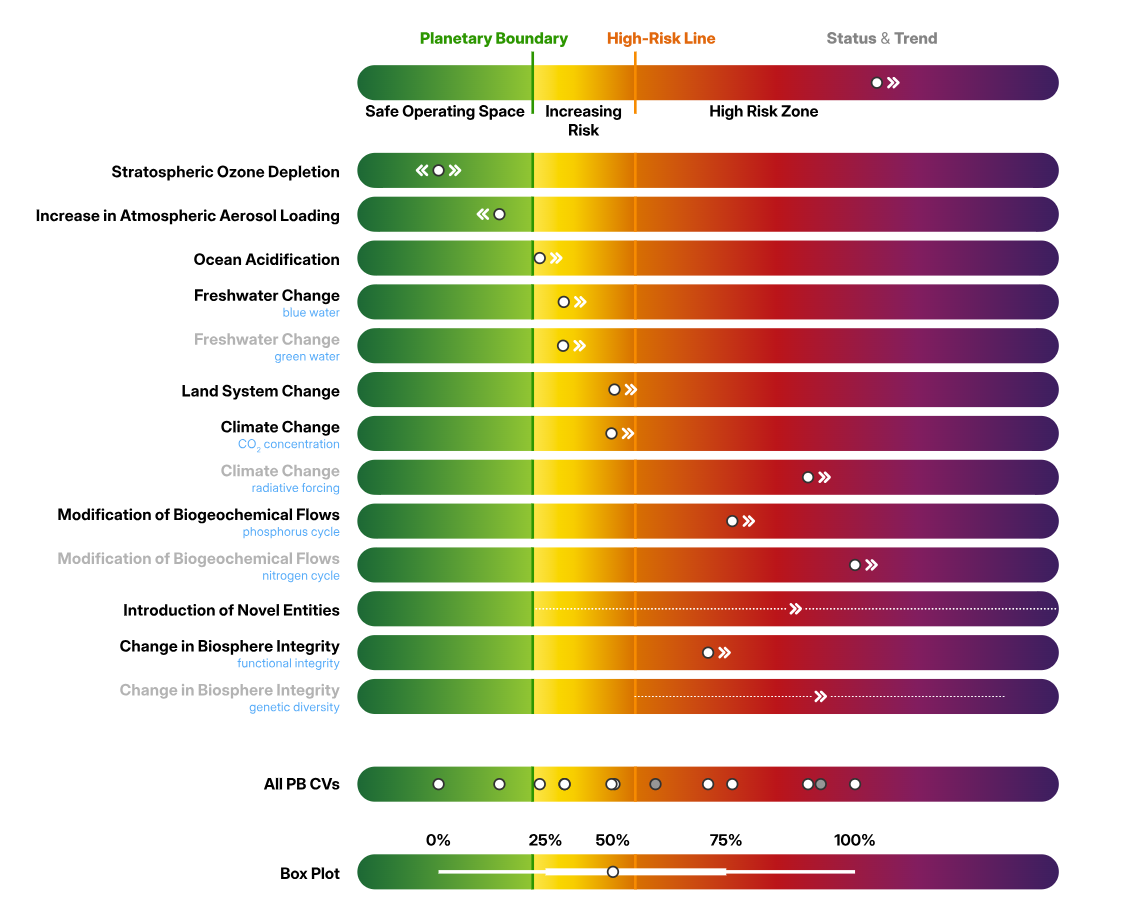
Biodiversity loss has shifted from being a niche concern to becoming a systemic risk for organizations, and is now one of the main environmental challenges of our time. Although less visible than the climate crisis, the biodiversity crisis is reaching critical levels, with impacts that affect both ecological balance and economic stability. According to the planetary boundaries framework, biosphere integrity—which includes both species extinction and habitat degradation—is one of the most clearly transgressed ecological thresholds. This compromises essential ecosystem functions and, consequently, the resilience of multiple economic sectors.
Planetary Boundaries PBScience
However, unlike climate change, biodiversity cannot be reduced to a single metric without losing its ecological and functional complexity. This poses a challenge for organizations seeking to rigorously understand and report their environmental performance: how can a living, multi-scalar, and highly contextual dimension such as biodiversity be quantified?

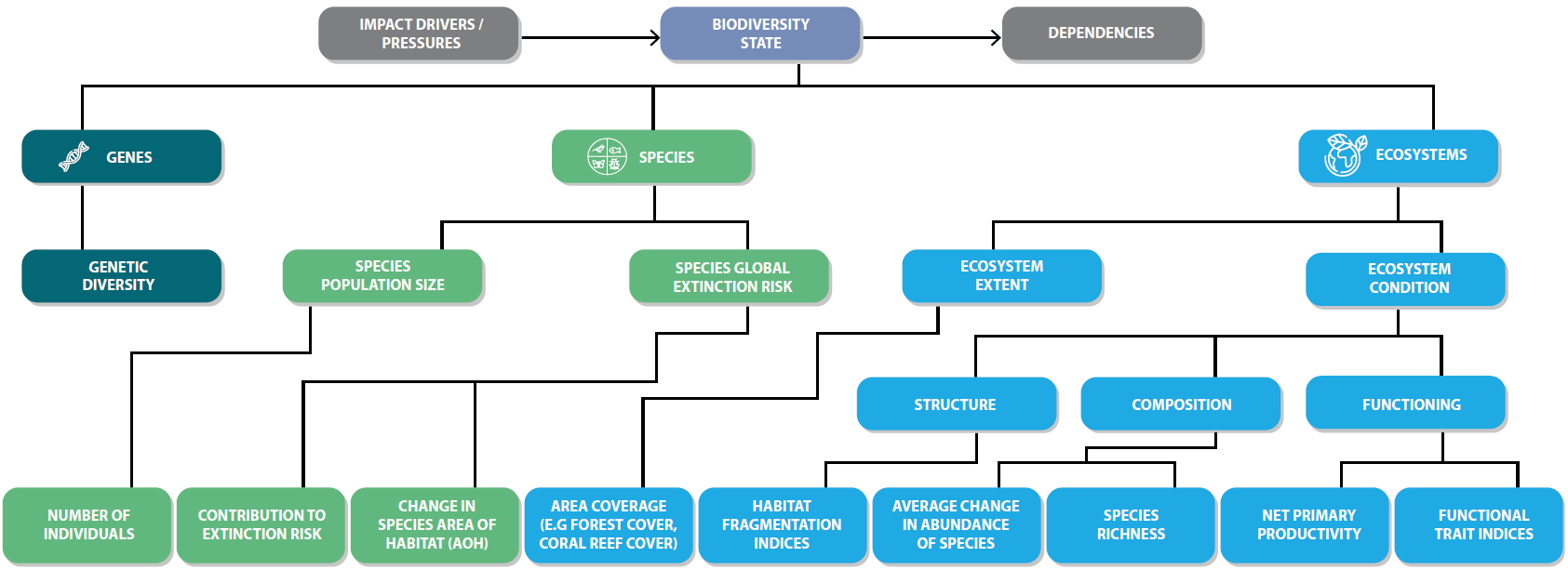
Components of biodiversity

To understand how biodiversity can be measured, it is essential to recognize its main ecological components, which function as hierarchical and interconnected levels. Each of them represents a different layer of the state of nature and responds to different pressures and impacts. Thus, each component includes specific dimensions that can be measured with different indicators: from the extent of an ecosystem to the population size of a species or the genetic diversity within a population. This structure enables the development of measurement systems that better reflect the complexity and state of biodiversity in a given territory, value chain, or economic activity.
Evaluating impacts on nature: state metrics and biodiversity footprint
Recommendations for a standard on corporate biodiversity measurement and valuation. Align, 2022.

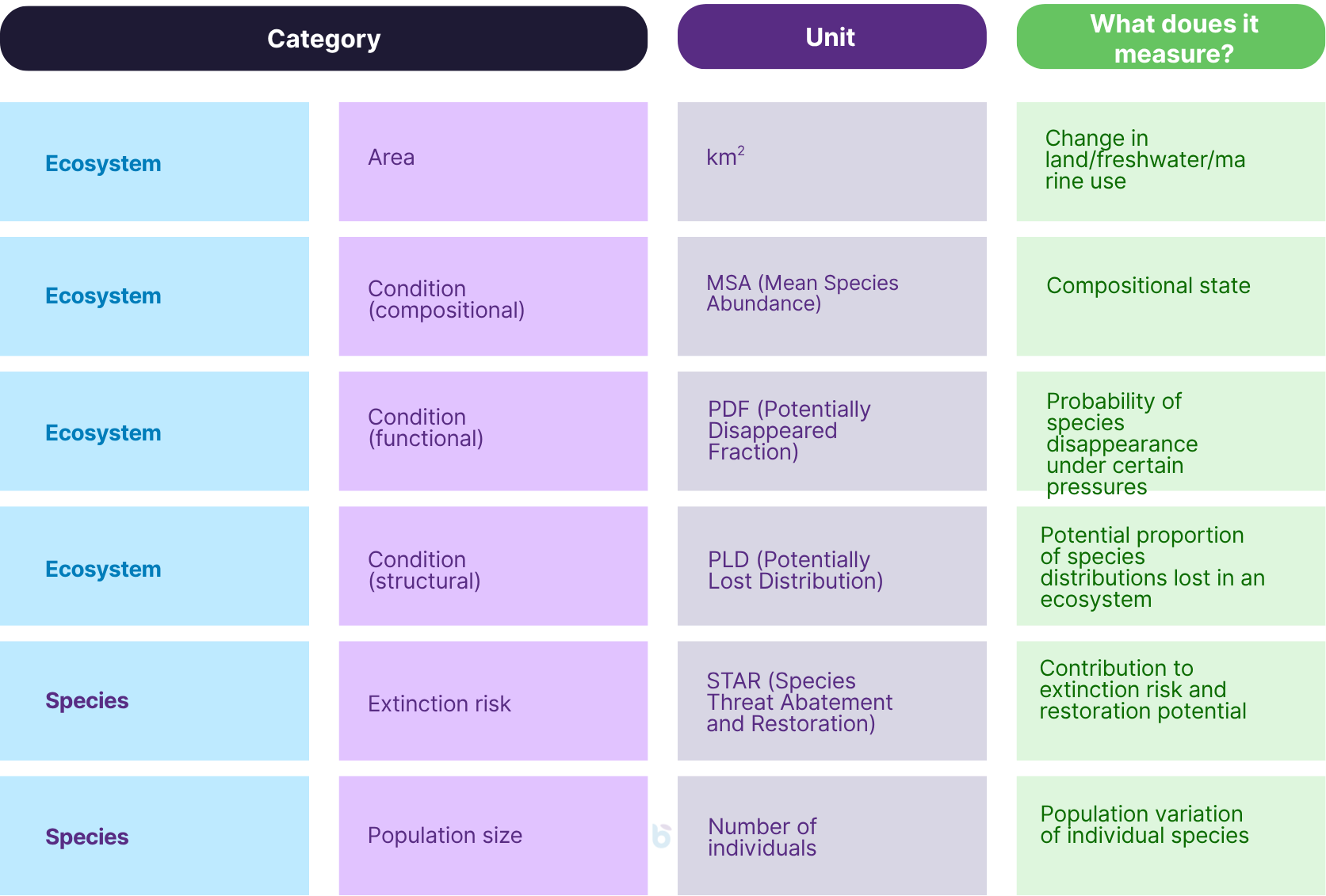
State of nature metrics

Measuring the state of nature requires selecting indicators that reflect its ecological complexity. Current recommendations converge on the need to combine multiple metrics, as none on its own captures all relevant dimensions. Below is a summary of some of the main metrics used in biodiversity assessments, although the range of options is broader and continues to evolve every day.
State of nature metrics - Baisma

These metrics make it possible to address the state of nature in a complementary way and can be integrated depending on the focus of the analysis: from large-scale assessments to more detailed impact studies. There is no single method capable of capturing all dimensions of biodiversity or addressing every decision-making scale. Methodological selection depends on the purpose, the level of decision-making, and the territorial context.

Currently, the Science Based Targets Network is developing the Nature Measurement Protocol: a methodological framework that will guide companies in measuring their impacts and dependencies on nature, serving as a common reference for scalable and interoperable measurement of key nature-related metrics. This protocol will provide standardized methodologies and tools, enable the connection of local-level data with national and global targets, and contribute to integrating nature measurement with carbon and financial accounting systems—thus becoming a key tool to drive positive impacts for nature.

How does the biodiversity footprint fit into this framework?

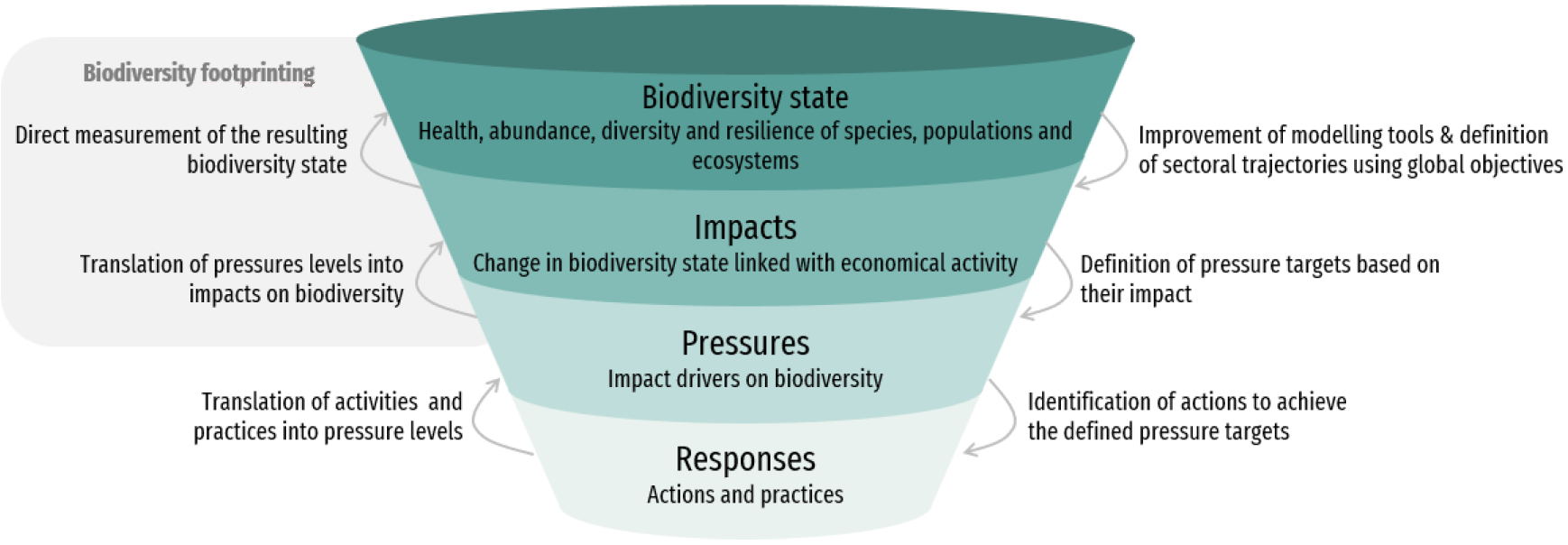
After reviewing the components and metrics used to characterize the state of nature, the question arises: how can organizations translate this complexity into operational tools? The biodiversity footprint is one of the most compelling approaches, as it allows quantifying the potential impact of an organization, primarily on the condition of ecosystems, resulting from its direct and indirect activities across its entire value chain. Its approach is model-based, relying on cause–effect relationships known as “pressure–state,” and it can be applied at the organizational level as well as to portfolios or products.

Fuente - Towards a protocol for ecosystem condition accounting –scoping an organisation’s biodiversity footprint – Draft. CDC Biodiversité, 2025.

Based on life cycle assessment (LCA) approaches, it enables moving from a reading of environmental pressures to an estimation of impacts associated with activities, products, or value chains, rather than a direct measurement of the observed state of nature. Results are typically expressed as a potential loss of biodiversity weighted by area (e.g., MSA·km² or PDF·km²), and in some cases also incorporate a temporal dimension to reflect the duration of the impact (e.g., PDF·km²·year).

This type of approach is particularly useful at corporate or value chain levels, where an aggregated and comparable estimation of potential impacts is required.

What is it used for?

From a practical perspective, integrating this type of quantification is not merely a technical exercise, but a way to strengthen environmental strategy and anticipate growing expectations around disclosure. Initiatives such as TNFD already recommend incorporating nature state metrics as part of impact analysis, in combination with pressure and dependency metrics.

This evidence-based approach provides organizations with:

  • Tools to prioritize and identify relevant ecological risks across the value chain.
  • The ability to identify key biodiversity impact drivers and compare them with sectoral benchmarks or market averages.
  • Insights into potential burden shifting between different impact drivers, supporting more informed decision-making.
  • Clearer communication of environmental performance to investors, regulators, and other stakeholders.

Additionally, for organizations that already have environmental footprints or other structured information systems in place, biodiversity can be progressively integrated, ensuring continuity with existing frameworks and facilitating the development of indicators aligned with emerging environmental transparency requirements.

In a context where biodiversity is gaining strong traction on the corporate agenda, building capabilities in this area becomes a medium-term competitive and resilience advantage.

At Baisma, we support organizations seeking to integrate biodiversity analysis into their sustainability strategy. If you want to explore how to address this challenge in your organization, get in touch with our team.

Insights sugeridos