

Baisma

By Dagny Vidal - October 2026

Science-based climate targets have become one of the main international frameworks for companies to define decarbonisation plans aligned with the Paris Agreement.

In recent years, thousands of organisations have used the Science Based Targets initiative (SBTi) methodology to validate their emissions reduction targets. However, the initiative is now entering a new phase.

The publication of version 2.0 of the Corporate Net-Zero Standard and the 2026–2030 strategy reflects an important evolution: the focus is now not only on setting ambitious emissions reduction targets, but also on demonstrating that these targets can be implemented and deliver real emissions reductions.

In this article, we review how SBTi currently works, the different types of targets, the validation process, and the key changes introduced in this new phase.

What is SBTi?

The Science Based Targets initiative (SBTi) is an independent organisation that develops standards to help companies set emissions reduction targets aligned with climate science.

Its main role is to:

  • Develop reference criteria and methodologies.
  • Validate climate targets for companies and financial institutions.
  • Ensure that these targets are consistent with the Paris Agreement’s 1.5°C limit.

Currently, more than 13,000 organisations worldwide have set or committed to setting science-based targets, making SBTi a leading voluntary framework for corporate climate action.

Near-term and net-zero targets

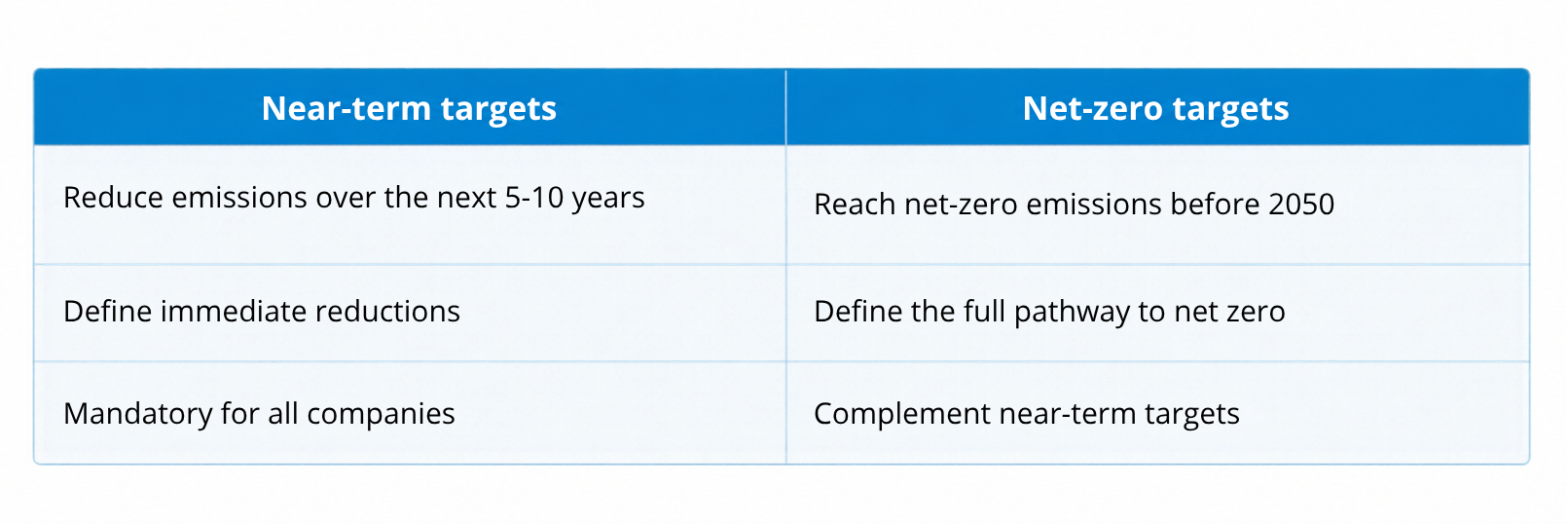
SBTi distinguishes between two main types of targets:

Near-term targets address the question:

What emissions reductions do I need to achieve during this decade?

While net-zero targets address:

How will the company reach net-zero emissions in the long term?

Therefore, a company seeking to validate a net-zero target must also set near-term targets. Both are part of the same decarbonisation strategy, but they address different time horizons.

How are the targets calculated?

The applicable methodology depends on the scope, sector, type of activity and how the company’s decarbonisation actually takes place.

For Scopes 1 and 2, version 2.0 includes, among others, the following approaches:

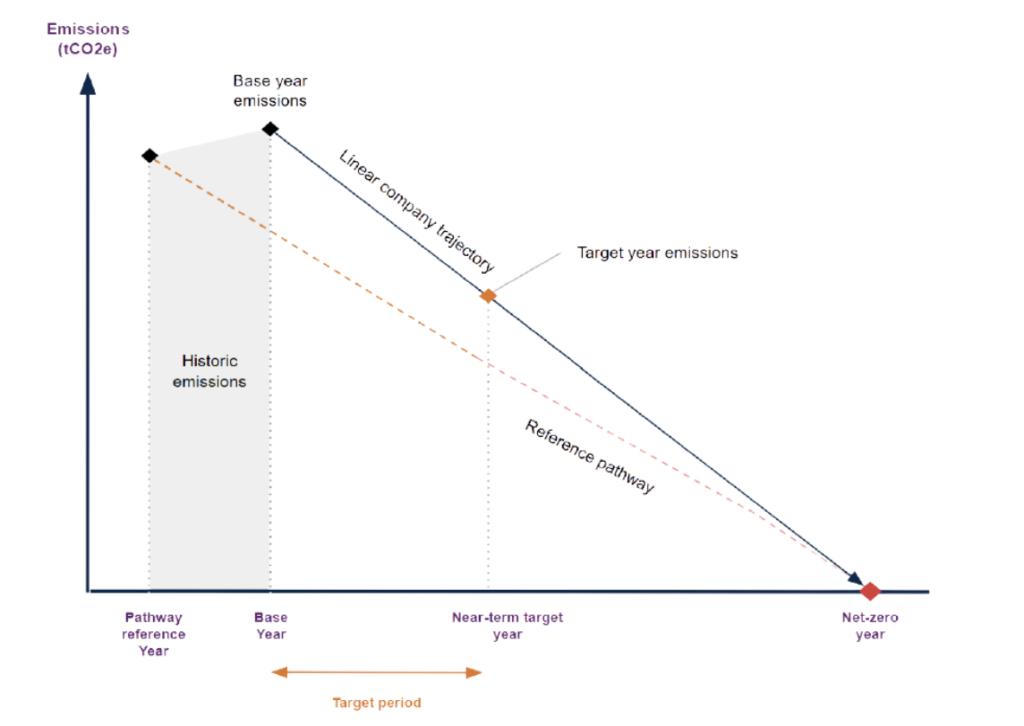
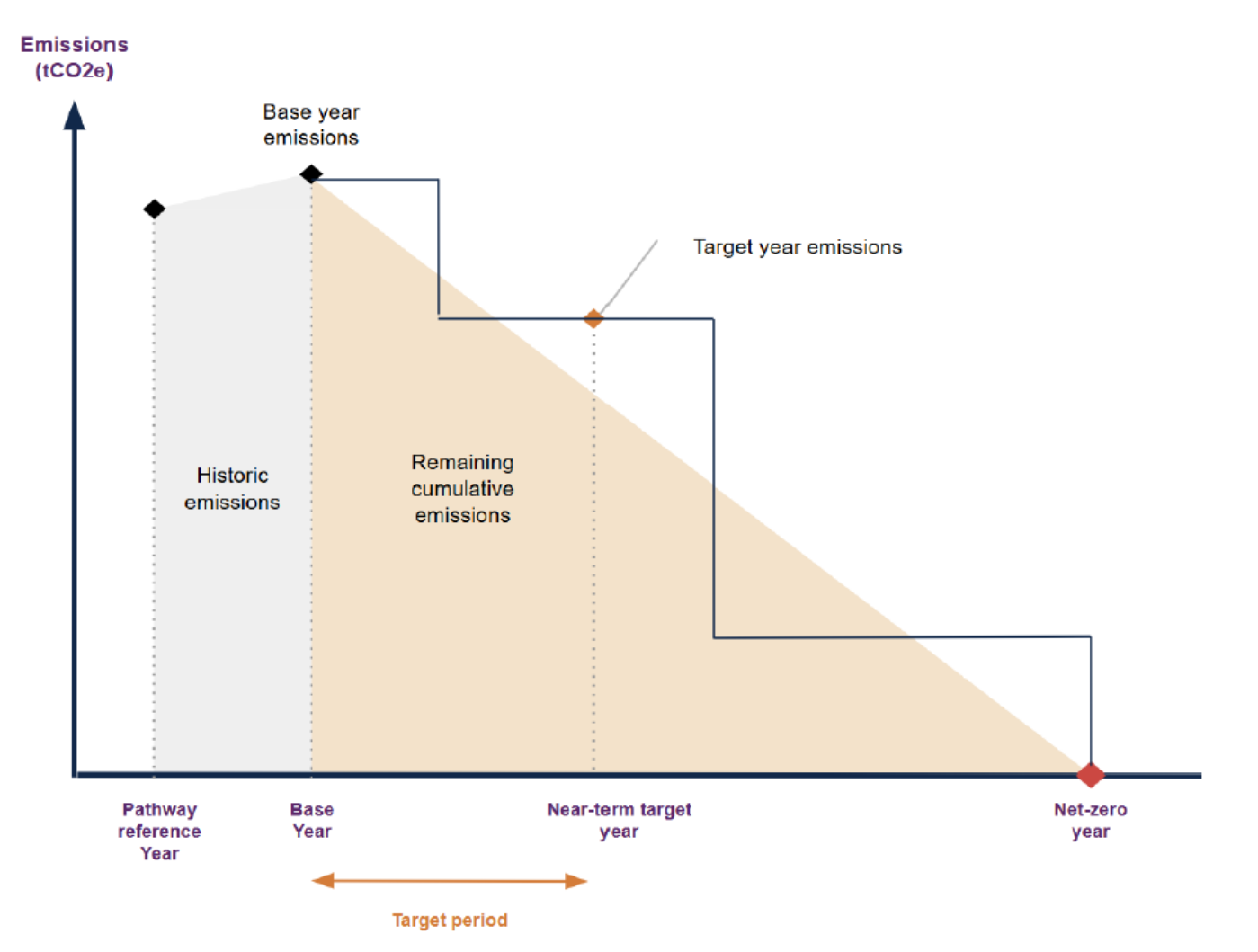
  • Linear contraction: establishes a linear pathway for reducing absolute emissions from the base year to the net-zero year.
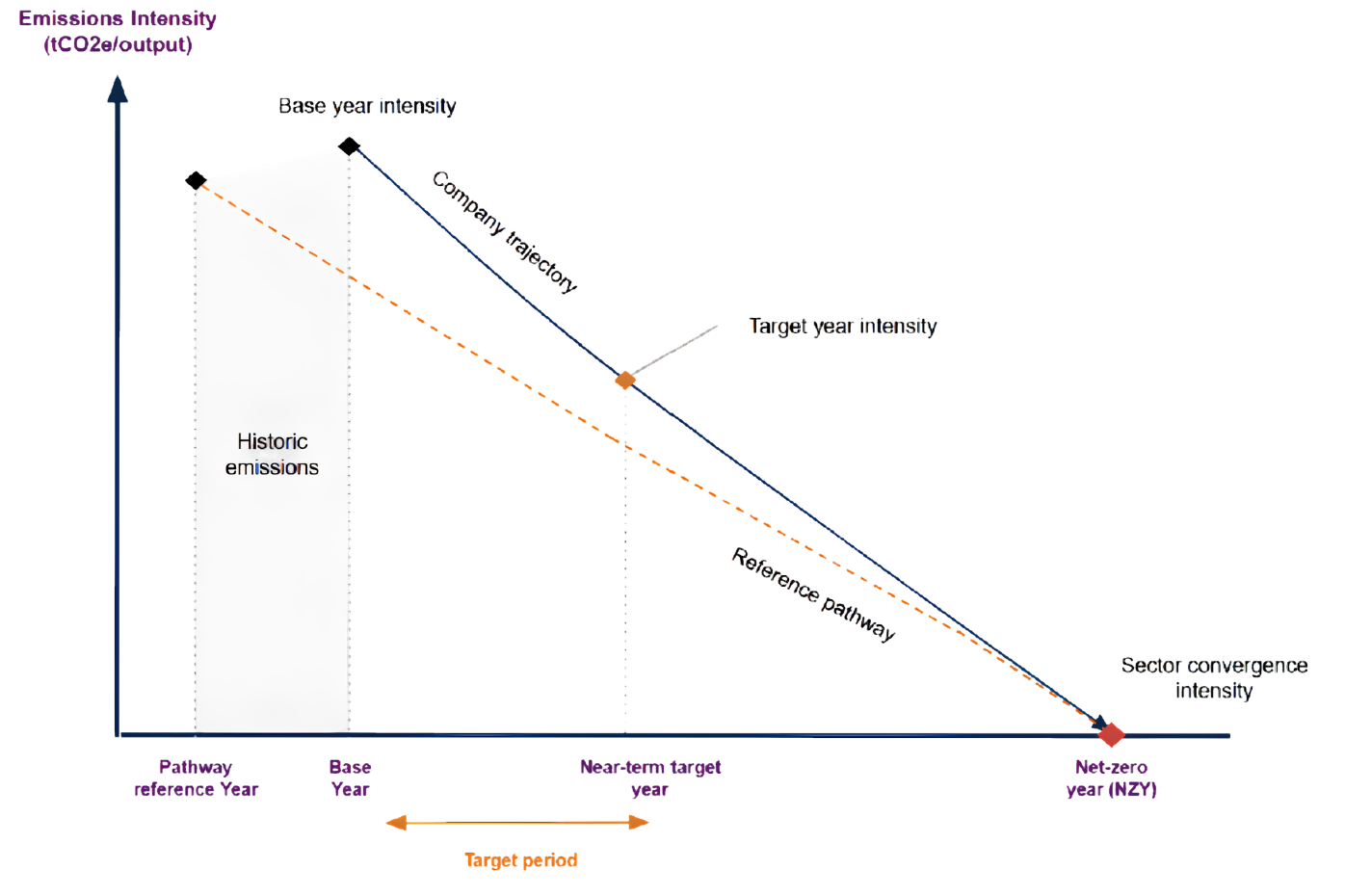
  • Sectoral Decarbonization Approach (SDA): defines intensity targets aligned with a specific sectoral pathway.
  • Asset decarbonization plan: adapts the pathway for companies whose decarbonisation depends on the renewal or replacement of physical assets.
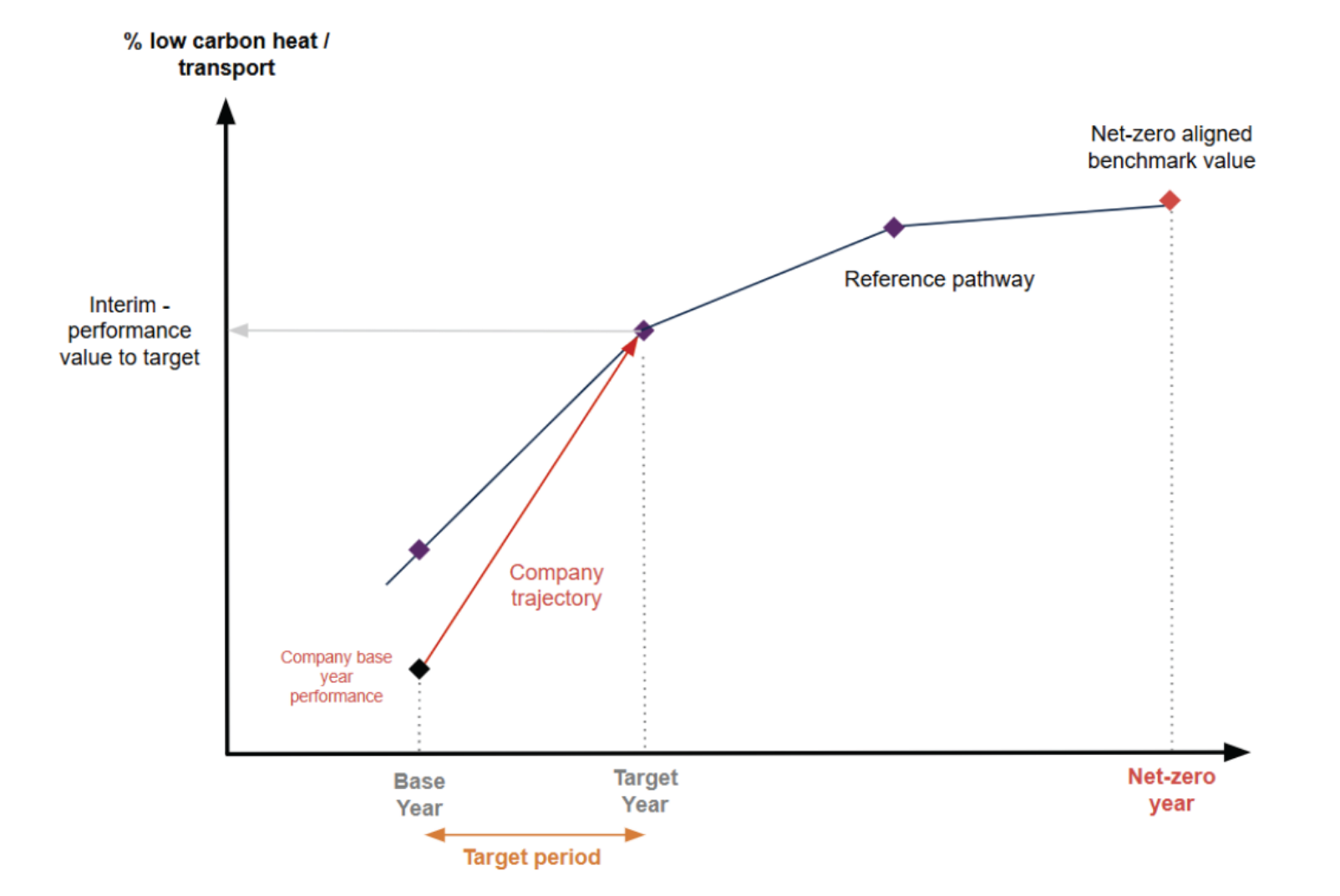
  • Linear alignment and index alignment: set targets based on the evolution of technological indicators or the proportion of activity aligned with low-carbon solutions.
Linear contraction - Método SBTi
Linear contraction
Sectoral decarbonization approach (SDA) - Método SBTi
Sectoral decarbonization approach (SDA)
Asset Decarbonization Plan - Método SBTi
Asset Decarbonization Plan
SBTi 2026: Updated guidance for setting and validating science-based targets
Index alignment

For Scope 3, companies can use overall emissions reduction targets, supplier or customer alignment targets, and category- or activity-specific methods. The latter allow the use of indicators tailored to the characteristics of the value chain, such as the proportion of suppliers with science-based targets, the use of low-carbon energy, product circularity, or the adoption of specific technologies.

The selected method should reflect which decarbonisation levers the company controls, what data it can obtain, and which indicator best represents actual progress in its activities. Version 2.0 itself provides different options for adapting targets to the sector, type of emissions and business context.

sbti - science based targets initiative

What does a company need to get started?

Before setting any targets, the company needs to understand its starting point.

The process typically begins with:

  • A GHG emissions inventory.
  • Definition of the organisational boundary.
  • Collection of Scope 1, 2 and 3 data.
  • Identification of the main emission sources.
  • An initial emissions reduction strategy.

How does the validation process work?

Companies can start the process in two ways:

  • The first is to register a commitment, which gives them 24 months to develop and submit their targets.
  • The second is to submit their targets directly for validation.

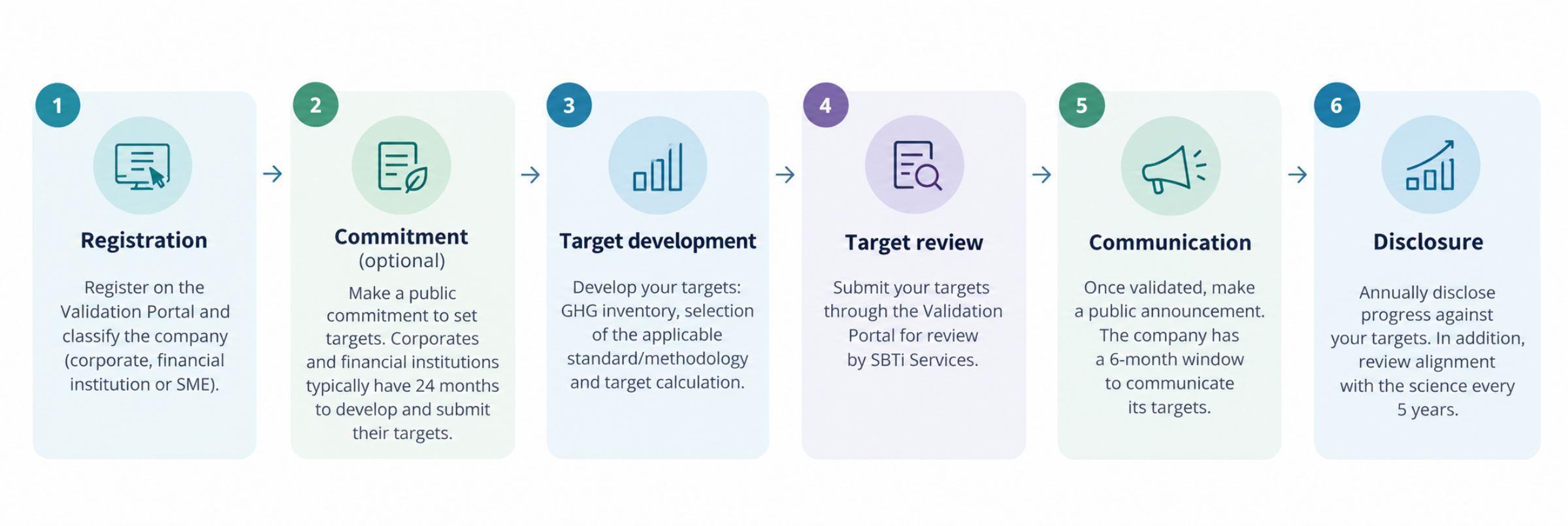
Once submitted to SBTi Services, the standard process is as follows:

SBTi 2026: Updated guidance for setting and validating science-based targets

During the evaluation, SBTi Services reviews whether the targets meet the methodological criteria and may request clarifications or additional information. Once validated, the company has up to six months to publicly announce its targets.

It is important to note that SBTi Services validates targets but does not provide consulting services. The preparation of the emissions inventory, data quality management and strategy development are typically handled internally or with the support of specialised consultants.

What is the validation fee?

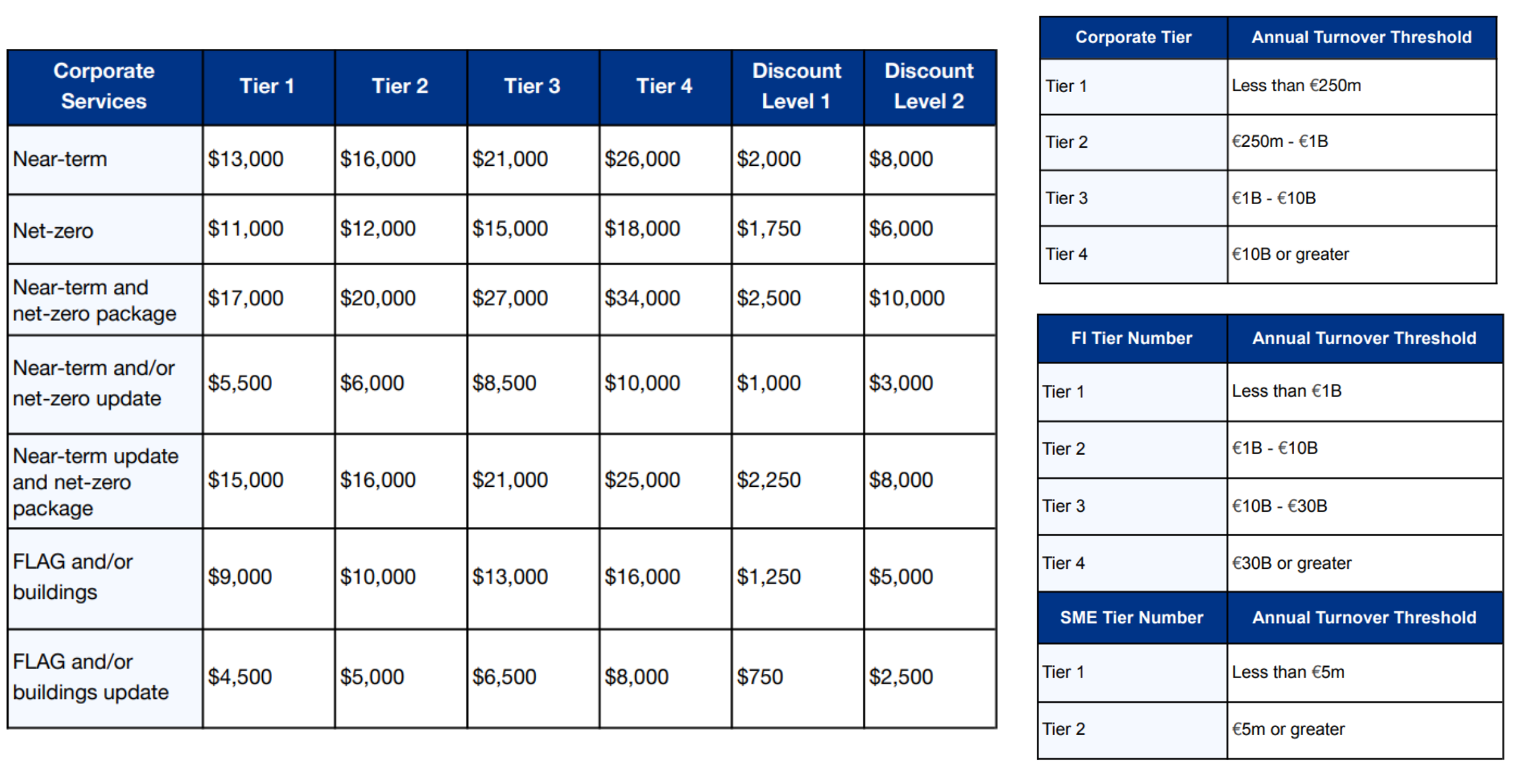
Target validation involves a fee.

Fees depend on the size of the organisation, the type of company and the type of validation requested. SBTi therefore periodically publishes a services catalogue with the applicable fees for each case.

Costes de validación SBTi 2026

What changes with version 2.0 of the Corporate Net-Zero Standard?

Although target validation remains at the core of the system, the new version represents a significant shift in approach.

From setting targets to demonstrating results

During SBTi’s initial phase, the main objective was to increase the number of companies setting science-based targets. The emphasis is now shifting towards implementation.

The new strategy places greater emphasis on progress tracking, transparency and the ability to demonstrate that planned emissions reductions are actually being achieved.

Greater flexibility depending on the context

The first version of the standard applied relatively uniform methodologies to very different companies.

Version 2.0 introduces an approach that is more tailored to:

  • Sectors.
  • Available technologies.
  • Asset renewal cycles.
  • Company size.
  • Geographical context.

This allows different approaches to target setting while maintaining scientific consistency.

Greater emphasis on transition plans

The new version gives transition plans a much more prominent role. Simply stating a future emissions reduction is not enough.

Companies must be able to explain how they intend to achieve it, what investments they plan to make, how their technology will evolve, and which milestones will be used to assess progress.

New approaches for emissions-intensive sectors

One of the most significant changes is the introduction of methodologies that better reflect the reality of industries with long-lived assets.

For example, some sectors cannot reduce their emissions along a linear pathway, as decarbonisation depends on the renewal cycles of machinery, infrastructure or industrial processes.

For these cases, approaches such as Asset Decarbonization make it possible to adapt the pace of emissions reductions to the actual replacement of assets while remaining consistent with the long-term carbon budget.

How does it relate to the CSRD?

The CSRD does not require companies to validate their targets through SBTi.

However, it does require companies to explain their climate targets, their transition plan, and how those targets are compatible with limiting global warming to 1.5°C.

In this context, SBTi is a widely recognised technical reference that can help structure targets, strengthen their credibility, and provide a consistent methodological framework for demonstrating alignment with climate science. SBTi’s 2026–2030 strategy itself highlights the complementarity and interoperability between the two frameworks.

Is your organisation ready to set science-based targets?

At Baisma, we help organisations develop greenhouse gas emissions inventories, define decarbonisation strategies, and prepare climate targets for validation in accordance with the Science Based Targets initiative (SBTi) methodology

If your organisation is considering setting science-based targets or needs support in preparing for validation, we would be happy to help.

Insights sugeridos